Applying Stuart Hall’s theory to CNN’s investigation on the Lekki tollgate shooting
Applying Stuart Hall’s theory to CNN’s investigation on the Lekki tollgate shooting
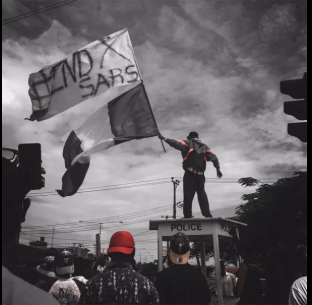
Today, the media don’t just tell us what is happening, they also shape our perception that is, how we view things that happen. This is the reason CNN’s investigation of the Lekki Tollgate shooting caused so many reactions across the world. Some see the report as a clear proof of government brutality, while others view it as biased or incomplete. The CNN’s video encoded messaged was aimed at unraveling what really happened at Lekki toll gate and seek justice for those affected. They used evidence like verified social media clips (e.g. at 2:45, where the military were caught shooting directly at protesters who were running helter-skelter for cover) and satellite broadcasting images (e.g. at 4:50, where we were shown when military vehicles were heading towards the tollgate with the full intent on causing harm to the protesters). But according to Stuart Hall’s theory, what CNN intended is not supposed to be always what people see because different groups like local protesters, the Nigerian government, and even international viewers, can decode this same video in different readings either dominant, negotiated, or oppositional ways. In the course of this critique, I would apply Stuart Hall’s encoding/decoding theory to CNN’s investigation on the Lekki Tollgate shooting that happened during the brutal #EndSARS protest in Nigeria. CNN’s video report is a powerful piece that tells the story of what happened on that sad night of October 20, 2020, when peaceful protesters were reportedly shot at by the military who then later joined forces with the police to commit the gruesome crime. Stuart Hall’s theory helps us break down how the video was created with a certain message (encoding) and others might interpret this said message (decode) in various ways. Some viewers might fully agree with CNN’s message (dominant reading), some might partly agree but question some points (negotiated reading), while others might completely reject it (oppositional reading). I will talk about the video’s intended message, then explore how local protesters, the Nigerian government, and international viewers might understand and respond to it differently.
Firstly, we need to dissect CNN’s intended meaning because we should know that CNN, as the sender of the message has encoded the investigation with the main purpose of exposing the truth about the Lekki shooting. The video clip was created to first show supposed peaceful protesters who only wanted to let their their voice be heard, young people whole wanted to be patriotic, innocent lives who were demanding an end to police brutality were met with brutal force from the military and police forces. CNN used video evidence to CNN encoded the video with the purpose of exposing the truth behind what happened at Lekki and demanding that the government be accountable for their actions and stop denying it. In the first part of the video, we see an influencer who was one of the protesters showing the peaceful atmosphere at the Lekki tollgate before the attack waving Nigerian flags and singing the national anthem. Then we we see verified social media videos where gunshots can be heard clearly as protesters scatter to avoid getting hit by bullets. This part encodes the message that the shooting really happened, not just as rumors or unverified claims. Later, CNN shows military vehicles moving towards Lekki proving that these military units were present at the tollgate. The encoding here is that the attack was planned and not accidental. In short, CNN’s encoded meaning is that the Lekki shooting was a planned attack on peaceful citizens and that international attention is needed to seek justice, satellite images, eyewitness reports, and verified social media clips to back up this claim. Their aim was to bring global attention to a deliberate act of violence against innocent people and the injustice of the Nigerian government.
However, when it comes to local protesters, most of them are more likely to have a dominant reading of CNN’s report. This is because for these protesters, the CNN video was just a replay of their lived reality — that they were peaceful, that they were attacked without cause, and that the government tried to cover it up so of course they would agree to CNN’s encoded message. The CNN investigation, in their eyes, validates their struggle and their pain. It helps amplify their voices which is something they had been fighting for all along. However, there might be a few among the protesters who have a negotiated reading of the report. These people agree with the core message that the shooting was wrong and that protesters were victims, but they may have doubts about some details CNN presented. For example, they might feel CNN left out certain parts of the protest movement or didn’t capture the full complexity of what happened before the shooting like at At 10:15, where CNN reported how the lights at the tollgate were switched off and CCTV cameras were allegedly removed or disabled shortly before the shooting. Some might also feel that the international media focused too much on Lekki and not enough on other places where similar violence occurred.Also, we may surprisingly have rare but possible tiny number of people who called themselves protesters but had other interests like Agberos and thieves who hijacked the protest for violence and an opportunity to steal. These people would definitely have an oppositional reading. They might say CNN exaggerated or was biased.
Furthermore, The Nigerian government would most likely have an oppositional reading of CNN’s investigation. This reason being that from the start, government officials denied that there was any wrongdoing nor killing at Lekki. They claimed that if shots were fired at all, they were blanks, or they aimed in the air but that was a big lie. To the government, CNN’s video report would be seen as an attack on the country’s image or defaming of the Nigerian government. They accuse CNN of spreading fake news or of interfering in Nigeria’s internal affairs. They reject the report’s message that the government deliberately harmed its citizens and tried to cover up the truth. Still, within the government, there may be a few people who have a negotiated reading. These individuals might secretly admit that CNN was right in some areas, that the protesters were peaceful and that mistakes were made on the part of the Nigerian military but they may still feel that CNN’s report was unfair in the way it painted the entire government as evil. They might argue that the situation was more complicated than CNN showed, that there was confusion on the ground, or that the report did not consider how hard it is to maintain law and order during large protests.It is very rare, but if there are any government officials who are strongly against the actions of their own side (maybe whistleblowers or reform-minded officers), they might have a dominant reading of CNN’s report. They might agree fully that the report spoke the truth and that the government needs to face the consequences.
Additionally, for international viewers, especially people from countries where freedom of protest is respected, CNN’s report would likely lead to a dominant reading. They would see the investigation as strong evidence that the Nigerian government attacked innocent people and tried to hide it. These viewers might feel sympathy for the protesters and anger towards the government. They would believe CNN’s message that the world must pay attention and act to stop such abuses. Many human rights groups and foreign politicians who watched the report fall into this category — they praised CNN for exposing the truth. However, some international viewers could have a negotiated reading. These are people who agree with CNN that the shooting was wrong but who also feel that CNN’s report didn’t give enough background on Nigeria’s internal struggles. There are also international viewers who might have an oppositional reading of the report. This group could include people who generally distrust Western media or believe that international news channels like CNN have hidden agendas.
To sum up, CNN’s investigation on the Lekki Tollgate shooting was encoded with a clear message i.e. to expose a grave injustice and call for accountability. However, as Stuart Hall’s theory explains, the CNN video has no fixed meaning. Different groups of people decoded the message in different ways based on their own positions, beliefs, and experiences. I as young critique writer have dominant reading of the video report. The local protesters mostly saw it as confirmation of their truth, though a few might have had mixed feelings. International viewers mostly supported CNN’s message, though some questioned the full fairness of the report or distrusted the media. This shows how powerful media like CNN’s investigation can be read in many ways and why understanding audience decoding is so important when we analyse media texts. Stuart Hall’s theory helps us see that meaning is not just made by the sender but also by the receiver. This is why media messages can have such wide and different impacts on different groups.
Comments
Post a Comment